Future Builders is an EveryYouth programme that offers supported living for young people in work, education or training at an affordable rent so they can pursue their careers without needing to access state benefits. The programme operates in Bristol, East Anglia, Sheffield and Scotland.
We spoke to Future Builders Coordinator Raymond Anderson, who heads up the programme at our delivery partner Roundabout in Sheffield, about how his own experience of leaving home at 16 inspired him to work with young people.
Ray grew up in foster care and left home at 16 with “nowhere to go”, sofa surfing between family and friends’ houses.
“I had a job earning £29 a week so I know how tough it is and how insecure homelessness is. If I had something like Future Builders when I was younger, I wouldn’t have failed living in my first property,” he says.
He now finds great reward in supporting young people in Sheffield to find independence through EveryYouth’s Future Builders programme.
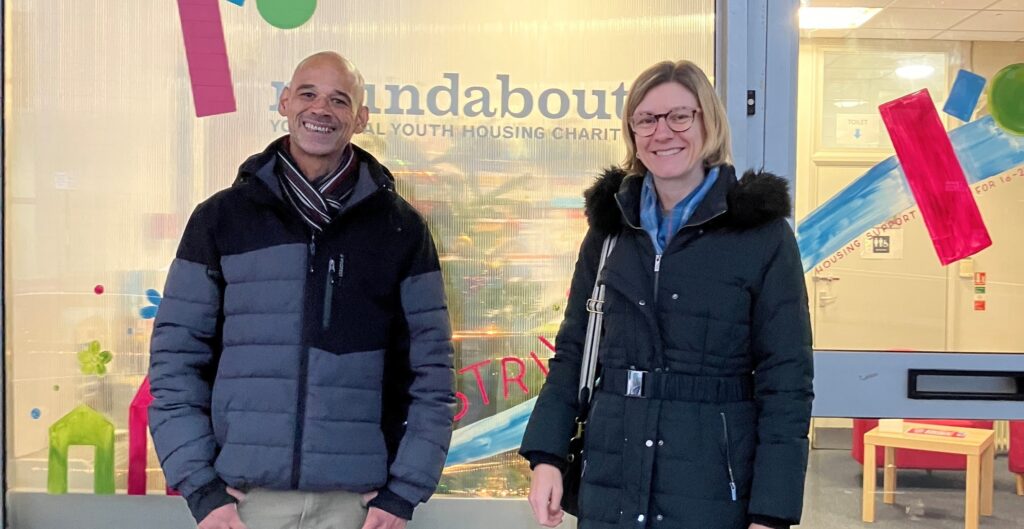
EveryYouth’s delivery partner in Sheffield, Roundabout, currently offers 16 bed spaces under the programme across five properties, with rent at least 50% less than the market rate for the area. Young people facing homelessness can stay in the programme for up to a year to save money before moving into the private rented sector or social housing.
“When I take people to their first house [after accessing Future Builders], I see excitement and nervousness at the same time. I get them to start picturing their future and you just see the hope in young people, more of a drive,” says Ray.
“Getting their own property is a massive thing. It’s a massive responsibility but it’s a massive joy to them. If you can get them past the initial worry…then they can start enjoying their own space.”
How does Future Builders work and who is accessing the programme?
Residents are encouraged to learn life skills such as cooking and budgeting, and given career support – including help with submitting job applications and preparing for job interviews – and financial support to eventually move on to independent living.
Young people from all backgrounds have taken part in Future Builders, including care leavers, asylum seekers, refugees and parents. Most tenants are in lower paid jobs and can’t afford private rent, says Ray.
“We’ve had a really diverse clientele over the past five years. Some of our young people have refugee status with no access to public funds. Those young people really find it difficult with language barriers to gain enough employment and wages to afford suitable private rented accommodation, so Future Builders has been a great help for people in that situation.
“We’ve had a lot of young people had to move out of home due to overcrowding and are lacking in life skills, and we’ve had clients who have been in private rented accommodation and not being able to afford the rates.”
What have young people achieved with the help of Future Builders?
Many young people have successfully transitioned from homelessness to stable accommodation and meaningful employment thanks to Future Builders, Ray explains.
One young person moved to Sheffield from London. While he was working he gained his HGV licence and secured a council tenancy.
“Deliveries are always going to be happening. Now he’s a lorry delivery driver. He sent me some pictures chilling out in the countryside. He donated back some blinds to the Future Builders project. He’s really grateful,” says Ray.
“We’ve had young people gone on to have babies. We’ve got a young person who has recently passed a sociology and psychology degree while he has been working. When he was homeless he was sleeping outside the same university he now has gained a degree from.”
How vital is the programme for young people in the current housing market?
There continues to be high demand for the Future Builders programme and an ongoing waiting list, Ray says, as young people are either priced out of the private rented sector, face discrimination from landlords, or simply left with no options due to low housing stock in Sheffield.
Rays says Future Builders will “never not be in demand”, adding: “Future Builders gives young people some stability, support as well, and some reassurance that they can stay when they are given the property.
“Jobcentres are pushing people into employment and pressuring them to get off benefits, but a lot of young people are in zero-hour contracts and you can’t get private rentals. It’s really difficult for our young people to get good housing.”
How can Future Builders remain successful?
Ray is urging local councils and private housing associations to provide long-term leases of underused properties that can be renovated into Future Builders homes.
“Give us the lease for a while then we’ll put a decent property back on the market after our young people have had a good living experience,” he says.
He also calls for support from funders to purchase properties that could permanently stay as Future Builders homes.
Ray says: “With the three properties we’ve got from the council, there’s always a chance they could ask for them back. But with the two properties funded by JLCT and EveryYouth, they will continue being Future Builders properties and that legacy can continue. If that could carry on, with funders purchasing these properties, that would be great.”
Donate to EveryYouth’s Future Builders programme.