This month, we’re proud to have The Sleep Charity backing our Put Youth Homelessness to Bed campaign helping to shine a light on an issue that is often overlooked: the critical link between sleep and youth homelessness.
Too many young people across the UK are struggling with sleep, and for those experiencing homelessness, these challenges are significantly worse. Without a safe, stable place to rest, sleep becomes disrupted, unsafe, and at times, impossible.
To explore this further, The Sleep Charity spoke to Yasmina, our Communications Coordinator, who has lived experience of homelessness, about how sleep deprivation impacts young people facing housing instability.
Youth homelessness is often misunderstood. When people hear “homelessness”, they often picture someone sleeping rough on the street. But for young people, it’s often sofa surfing, living in cars, moving between friends’ houses or staying in temporary accommodation.
More than 123,900 young people in the UK are experiencing or at risk of homelessness, and many more experiencing hidden homelessness. 90% of the young people in homelessness services have experienced multiple adverse childhood experiences and virtually all grew up in poverty. This causes the young people we support to often experience disrupted education, insecure relationships and have no positive role models. These experiences shape their trust in systems contributing to disengagement.
At EveryYouth, we want to build trust and connection, reducing polarisation and increasing participation, promote economic models and systems that reduce inequalities and advance equity and justice for marginalised communities.
“In March 2023, I slept in my car for just over two weeks. As a teenager, I had also slept rough and lived in supported accommodation. I was working part-time and studying at university, but I couldn’t maintain any kind of routine. My mental health was the worst it had ever been.”
Without a stable place to live, everyday life becomes overwhelming. Concentration drops, anxiety increases and relationships can break down.
“When you don’t know where you’re sleeping that night, deadlines and friendships fall down the priority list.”
For young people experiencing homelessness, sleep is rarely restful.
“When I was sleeping in my car, I couldn’t relax. I was scared someone might try to break in. Every noise felt amplified.”
Common barriers include:
Without safety, sleep becomes fragmented and exhausting.
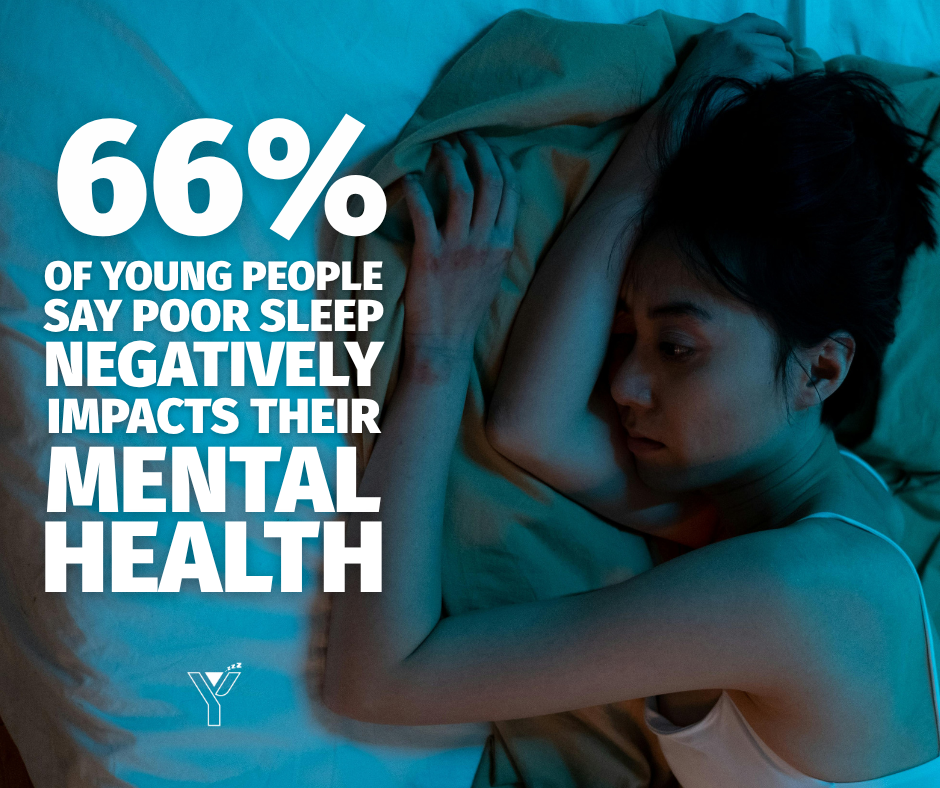
Sleep deprivation affects everything. 66% of young people say poor sleep negatively impacts their mental health. It lowers mood, increases irritability, reduces concentration and makes regulating your emotions a lot harder.
“I felt so overwhelmed by making small decisions like what I wanted to drink. Everything just felt harder than it needed to be. I was struggling to think clearly, focus on work, or think about life after I had finished my degree.”
Many young people experiencing homelessness have experienced trauma.
Trauma keeps your nervous system on high alert. When you’ve experienced abuse, neglect or instability, your body struggles to relax. Nightmares, anxiety and feeling hyper aware are all common. Even when a young person is in a safer environment, the body can still feel on guard, making it difficult to relax.
That’s why support must go beyond providing a bed. At EveryYouth, we focus on trauma-informed support, helping young people feel safe both physically and emotionally.
Having a safe, stable place to rest can be transformative.
“When I moved into my own accommodation that small sense of safety changed everything. I could start building a routine again. I could think about the future instead of just surviving the night.”
Stability allowed me, and many other young people to:
This is exactly what Put Youth Homelessness to Bed represents – a safe night’s sleep is often the first step out of homelessness.
Sleep is not a luxury – it’s a fundamental human need.
By working with partners like The Sleep Charity, we’re helping to raise awareness that sleep underpins mental health, education, employment and long-term independence.
“Things do get easier and better. If you’re struggling to sleep, it doesn’t mean you’re weak – it means you are human. You’re dealing with a lot.”
If you’re worried about your housing situation, there is always support available. You just need to be brave enough to ask for help.
Young people can speak to their local EveryYouth Delivery Partner or contact your local council’s housing team. If in immediate danger, contact emergency services.
To better support young people facing homelessness, we need to increase our understanding into the causes of homelessness, which will lead to better and more effective early intervention. An increase in affordable housing options, recognition that employment programmes like Project Flourish lead to young people securing good quality jobs and more support for mental health would also significantly improve the outcomes of young people in homelessness accommodation.
Find out more about the Put Youth Homelessness to Bed campaign and how we’re working with partners and communities across the UK to ensure every young person has a safe place to sleep and the opportunity to build a brighter future.